 Monitorture
40″ 5120×2160: Flat vs 2500R
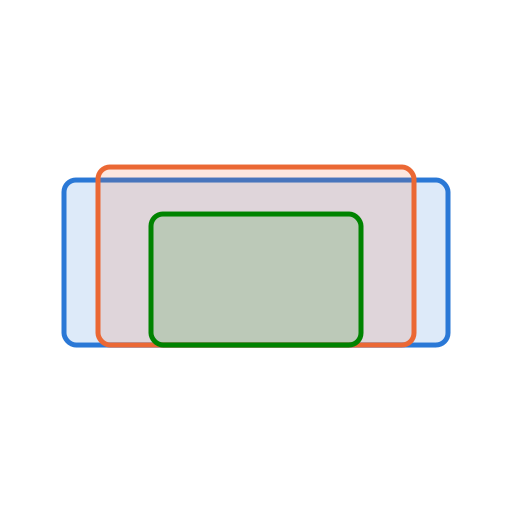
Same panel — same 40″ diagonal, same 5120×2160 grid — bent to different radii. A monitor's R number is the radius, in millimetres, of the circle the screen is a slice of: a smaller number is a tighter curve. Here's this panel from above at Flat vs 2500R, drawn to scale.
| Curve | Curve depth | Screen wrap | Ideal distance | Best for |
|---|---|---|---|---|
| Flat | — | — | — | Straight lines stay straight — best for CAD, layout & print |
| 2500R | 44 mm | 21° | 2.50 m | Very gentle — negligible bow; fine for detailed document work |
Which curve should you pick?
The radius doubles as the ideal viewing distance: sit about that far away and every point of the screen is the same distance from your eyes, so nothing at the edges needs re-focusing. The 2500R version wants you at ~2.50 m — while the flat panel is happy at any distance.
The catch is that a curve bends every straight line. For films, games and a wraparound feel a tighter radius wins. For work built on straight edges and exact geometry — documents, spreadsheets, CAD, photo and layout — a bowed horizon is distracting, so a flatter panel (or none) reads truer. Match the curve to whichever you do most, then sit near its ideal distance.