 Monitorture
16:9 vs 16:10 at 32″
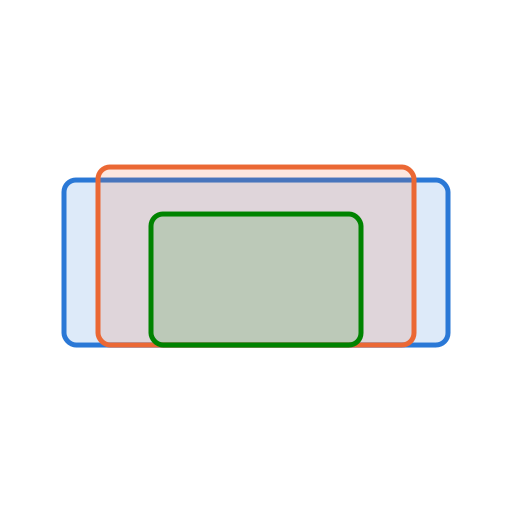
Both are 32″ monitors, but the aspect ratio changes the shape of the screen — not just the pixel count. At the same 3840px width, 16:10 is 11% taller (2160→2400 rows) — extra vertical room stacked below the same width. Here are both panels drawn to scale.
| Aspect | Resolution | Width × Height | Screen area |
|---|---|---|---|
| 16:9 | 3840 × 2160 | 27.9″ × 15.7″ | 438 in² |
| 16:10 | 3840 × 2400 | 27.1″ × 17.0″ | 460 in² |
Which shape should you pick?
A 16:9 screen is wider relative to its height. It fills 16:9 video and most games edge-to-edge with no black bars, and its shorter height is easier to take in without looking up and down.
A 16:10 screen trades a little width for noticeably more height (about 11% more at the same width). Those extra rows show more of a document, web page, timeline or code without scrolling, which is why 16:10 is popular for productivity, coding and design — at the cost of small letterbox bars on full-screen 16:9 video.